Loading...
Serving Harrisonburg, VA and surrounding areas. (540) 246-0519
Ready to build but not sure if the ground underneath will cooperate? We handle everything from site prep through the final cure so your slab is solid before any framing begins.
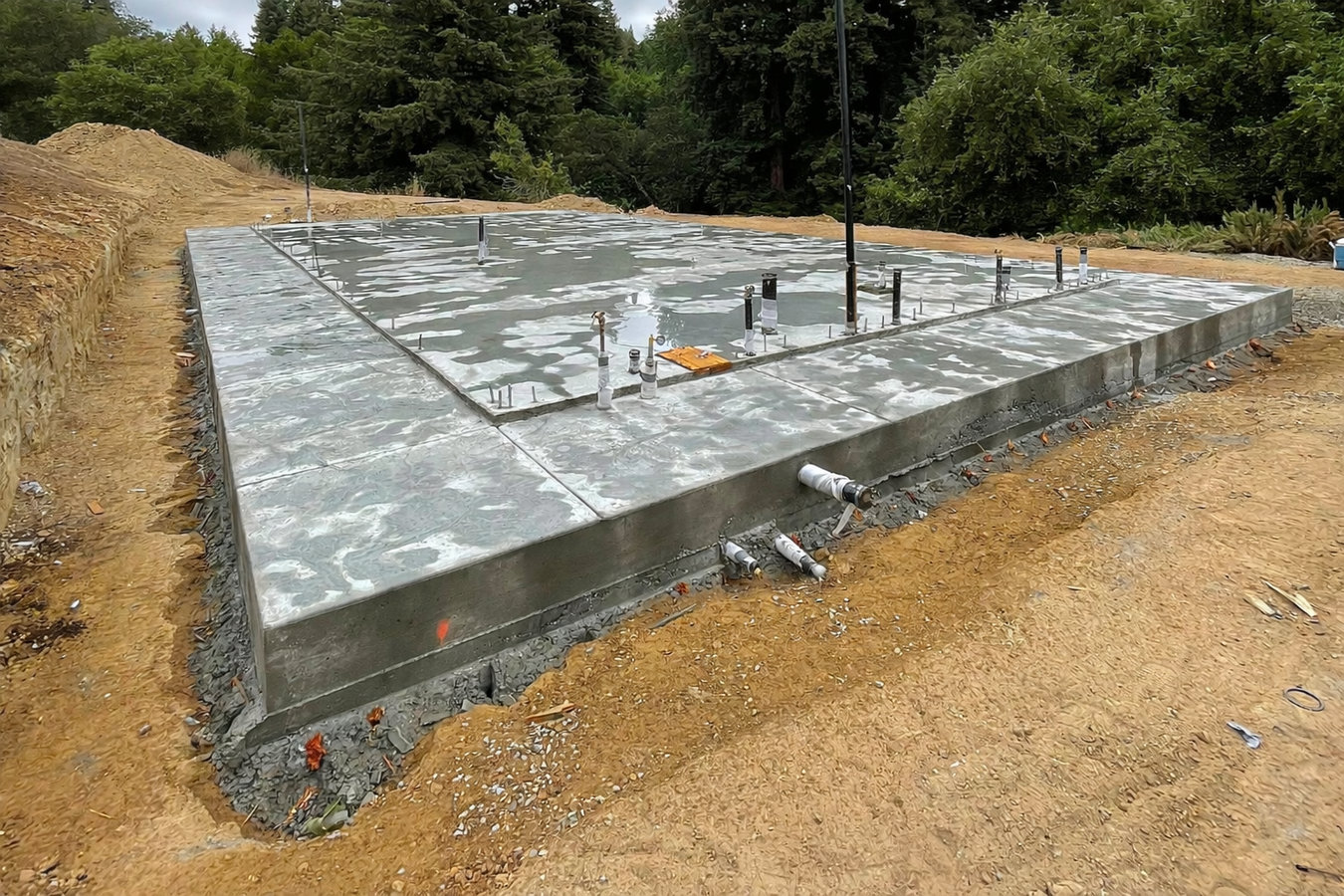
Slab foundation building in Harrisonburg means grading and compacting the ground, laying a gravel base, placing steel reinforcement, and pouring concrete in a single pour - most residential jobs take one to two weeks from site prep through initial cure.
The Shenandoah Valley's clay-heavy soils make ground preparation more important here than in many other parts of Virginia. Clay expands when wet and shrinks when dry, and that seasonal movement is one of the most common reasons slabs crack in this region. Getting the base right before the pour is what separates a slab that lasts decades from one that starts showing problems in year three. If you also need foundation installation work - such as a full basement or footings for an addition - we handle that too.
Every slab project in Harrisonburg requires a permit through either the City of Harrisonburg or Rockingham County, depending on where your property sits. We handle the permit application, coordinate inspections, and keep you informed at each stage so there are no surprises.
If you have purchased land in Harrisonburg and plan to build, you need a slab foundation before any framing can begin. Many new builds on the city's south and west sides use slab construction because the terrain there is relatively flat and the process is efficient. This is the starting point, not an optional step.
Small hairline cracks in existing concrete are common and usually not urgent. But if you can slide a quarter into a crack, or if cracks run diagonally from the corners of doors or windows, the slab may be moving in a way that needs attention. In Harrisonburg, clay soils that expand and contract with seasonal moisture are a common cause of this kind of movement.
When a slab shifts, the frame above it shifts too - and the first sign is usually doors or windows that feel tight or no longer latch properly. This is worth paying attention to in older Harrisonburg homes built in the 1970s and 1980s. If multiple openings are affected at the same time, have the foundation evaluated.
If water consistently collects against the perimeter of your concrete after a rainstorm instead of draining away, it is working its way into the slab and the soil beneath it. Harrisonburg's summer thunderstorms and spring snowmelt make this a real seasonal concern. You can check for this yourself just by walking around after a heavy rain.
We build concrete slab foundations for new homes, garages, accessory structures, and additions across Harrisonburg and the surrounding area. Every project starts with a site assessment - we look at lot grading, soil conditions, and any drainage concerns before we recommend a design. If the lot has significant slope or signs of poor drainage, we address that in the plan before the concrete ever arrives. For projects that need concrete footings as a separate element under a wall or post, we handle those at the same time to keep the schedule tight.
The pour itself includes form setting, rebar or wire mesh reinforcement, vapor barrier placement, and a finished surface ready for framing. We coordinate with your builder or GC if needed, and we make sure the slab dimensions and elevation match your construction documents. Cold-weather pours get protection plans - we do not leave curing concrete exposed to Harrisonburg's November-through-March freezes without a clear protocol in place.
Suits homeowners building a primary residence or large addition on a prepared lot.
Suits homeowners adding a detached or attached garage to an existing property.
Suits homeowners building a workshop, shed, or backyard studio that needs a concrete base.
Suits homeowners tearing down an old structure and starting fresh with a code-compliant foundation.
Harrisonburg sits at roughly 1,350 feet in the Shenandoah Valley, and the winters here are cold enough that the ground freezes and thaws multiple times each season. Concrete poured in those conditions without protection can be permanently weakened. That makes scheduling and cold-weather planning a real part of doing this work correctly here - not just a footnote. The broader valley also sits on limestone bedrock with karst characteristics in some areas, meaning a site evaluation before breaking ground is a reasonable step, not an upsell.
Harrisonburg is one of the faster-growing small cities in Virginia, and that growth means new slab projects are a steady part of the local market for any concrete slab contractor working in the valley - especially in developing areas on the south and east sides of the city. We serve the full area, including Staunton and Waynesboro, where similar soil and climate conditions apply. If your project is in Rockingham County rather than the city, the permit process runs through the county building department - we know both jurisdictions and handle the paperwork either way.
We respond within one business day. You describe the project - size, location, what it will support - and we schedule a site visit before giving you a number. Written estimates break out site prep, materials, and labor separately.
We apply for the building permit through the City of Harrisonburg or Rockingham County before any work begins. Site prep follows - grading, compaction, and gravel base placement. This stage protects the entire investment that comes after it.
The crew sets forms to the correct dimensions, places rebar or wire mesh and a vapor barrier, then pours and finishes the slab in a single day. We monitor forecasts and have cold-weather protection ready for shoulder-season pours.
The slab cures for at least a week before framing begins. A city or county inspector visits to confirm the work meets code. We walk you through the finished slab and provide copies of all permit and inspection documentation.
Free estimate, no obligation. We handle permits, inspections, and everything in between.
(540) 246-0519Clay soils expand and contract with moisture, and cutting corners on compaction or the gravel base is one of the most common causes of cracked slabs in this region. We treat soil prep as the most important phase of the job, not a formality to rush through before the pour.
We pull permits for every slab project - no exceptions. That means a city or county inspector independently confirms the work meets code before we close out the job. You get documentation that protects you when you refinance or sell.
Harrisonburg winters are cold enough to damage concrete that is not protected while it cures. We plan around the forecast, and when shoulder-season conditions require it, we have a specific approach for protecting the slab - not just hoping the temperature cooperates.
Virginia requires contractors to hold a state-issued license for work above certain thresholds. You can verify any contractor's license status through the{" "}Virginia Department of Professional and Occupational Regulation. We carry that license and are glad to share it.
Ground preparation and proper curing are where slab foundations succeed or fail. We focus on getting those stages right so every trade that comes after us has a level, dimensionally accurate slab to build on.
Full foundation installation for homes and additions, including basement and crawl space options suited to Harrisonburg's soil and frost conditions.
Learn MoreIndividual footings for posts, walls, and structural columns, dug to Harrisonburg's frost depth and poured to carry the load above.
Learn MoreSpring and summer slots fill fast - reach out now to lock in your start date before the busy season closes out.