Loading...
Serving Harrisonburg, VA and surrounding areas. (540) 246-0519
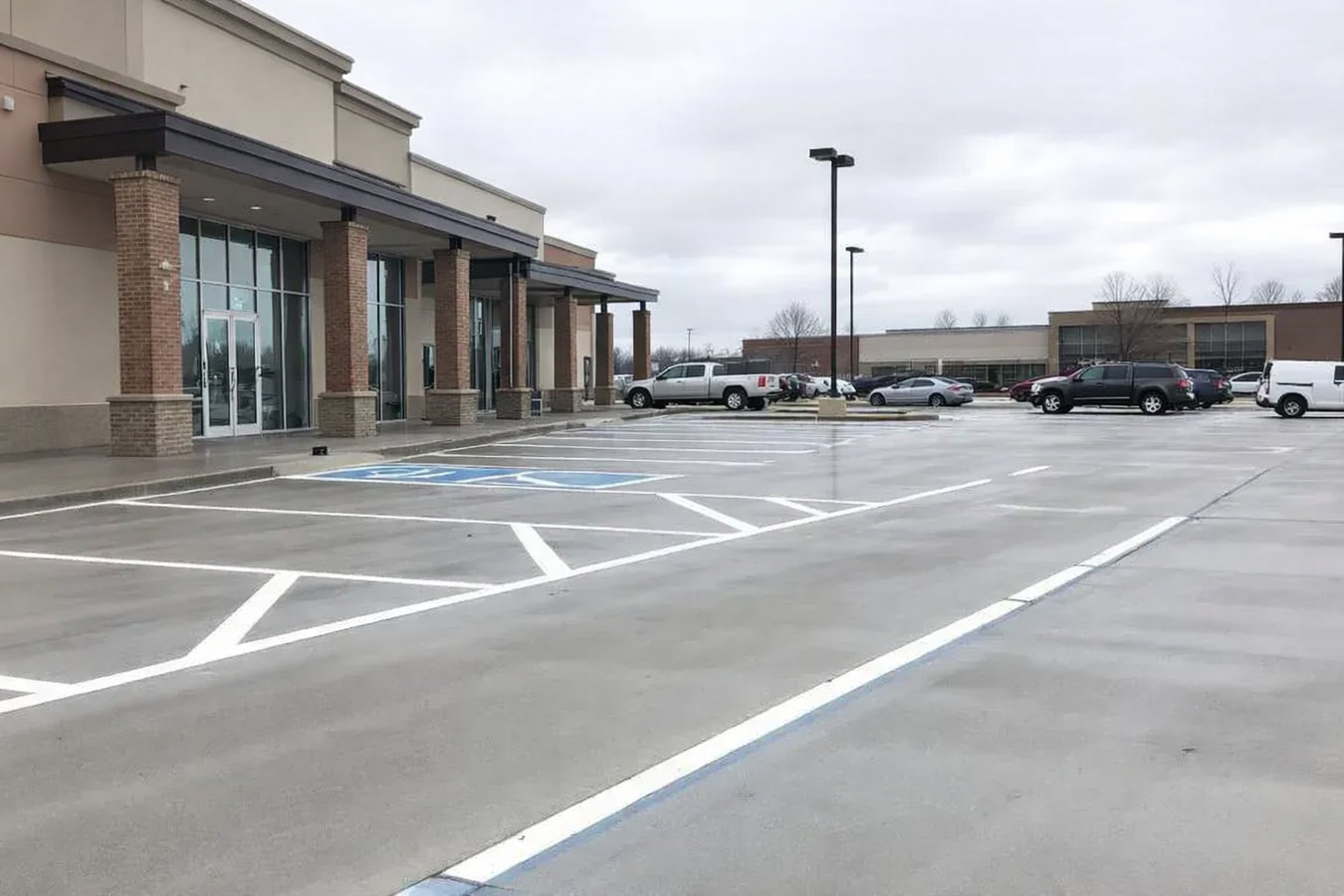
Cracked surfaces, pooling water, and gravel ruts are solved permanently with a properly built concrete lot that handles Shenandoah Valley winters year after year.
Concrete parking lot building in Harrisonburg means pouring a reinforced slab over a prepared gravel base, graded for drainage and designed to resist freeze-thaw damage, with most lots ready for vehicle traffic within one week of the pour.
If you are dealing with a gravel lot that turns to mud every spring, an old asphalt surface that keeps cracking, or you simply need permanent parking for a new structure, concrete parking lot building in Harrisonburg is the long-term answer. Unlike asphalt, a properly built concrete lot does not need resurfacing every few years. You can also pair your new lot with a concrete driveway to create a seamless, low-maintenance paved surface across your entire property.
Whether you are paving a private lot for a rental property, a small commercial space, or converting an unpaved area near your home, the right base preparation and concrete mix make the difference between a surface that lasts 30-plus years and one that needs repairs within five.
If you have patched cracks in your current surface and they keep reappearing, the slab has reached the end of its useful life. Harrisonburg freeze-thaw cycles through winter accelerate this process, and a lot that was marginal in October often looks significantly worse by March. Patching buys time, but at some point full replacement is the more cost-effective choice.
Puddles sitting on your lot for hours after a rainstorm mean the surface has settled unevenly or was never graded correctly. Standing water is serious in Harrisonburg's climate because it works into surface cracks, freezes overnight, and breaks the concrete apart from the inside. A new lot built with proper drainage moves water off the surface quickly.
Many older properties in and around Harrisonburg still have unpaved parking areas. If your gravel lot creates dust in summer, mud in spring, or ruts after heavy rain, a concrete lot solves all of those problems permanently. It also improves the appearance of the property and can increase its value.
If you have started receiving delivery trucks, service vans, or equipment on a surface built for lighter use, you may see cracking that gets worse quickly. A concrete lot built to the right thickness for your actual traffic can handle that load for decades without the ongoing repair costs you are dealing with now.
Every concrete parking lot project starts with the ground underneath. We remove existing pavement or vegetation, grade the soil so water drains away from buildings, and compact a gravel base that gives the slab a stable foundation. From there, we pour concrete mixed to handle Harrisonburg winters, cut control joints to manage future expansion, and finish the surface to specification. If you need more than a parking surface, we handle related work including concrete footings for structures adjacent to your lot.
We also manage the permit process with the City of Harrisonburg, so you are not navigating the stormwater review and zoning requirements on your own. For properties that need both a lot and connecting pavement, we coordinate the work so drainage and grading are handled as a single project rather than patched together later.
Suits property owners converting a gravel or unpaved area to a permanent concrete surface for the first time.
Suits owners with heavily cracked or settled lots where patching is no longer cost-effective.
Suits commercial and mixed-use properties that regularly receive trucks, equipment, or delivery vehicles and need a slab poured thicker than residential standard.
Suits properties where standing water has been a recurring problem and the solution needs to start at the ground level before concrete is poured.
Harrisonburg sits at roughly 1,350 feet in the Shenandoah Valley, and the freeze-thaw cycles here are more punishing than in lower-elevation Virginia cities. Temperatures dip below freezing at night and climb above it during the day throughout winter, and a parking lot built with the wrong mix or finishing technique will start to flake and crack within a couple of seasons. The clay-heavy soils common throughout this part of the Valley add another variable: clay expands when wet and shrinks when dry, which means a base that was not compacted and prepared correctly will move under the slab and cause cracking from below. Getting both of those factors right requires working with a contractor who has poured lots in this specific climate before. Homeowners in Staunton and Waynesboro face the same soil and climate conditions, and we carry that experience to every project across the region.
Harrisonburg also has active stormwater management requirements that apply when you add a significant paved surface to a property. The city wants to confirm that rainwater will be handled in a way that does not burden neighboring properties or the local storm drain system. James Madison University drives year-round parking demand across the city, which means local contractors are experienced with lots at a range of scales, but it also means project slots fill up fast once spring arrives. Planning your project in late winter and locking in a schedule before the busy season is the most reliable way to get the start date you want.
We visit your property to assess the size of the area, existing surface condition, slope, and drainage. You receive a written estimate within one business day of the visit.
Once you accept the quote, we apply for any required permits from the City of Harrisonburg. Permit review typically takes one to two weeks, so starting this step early keeps your project on track.
We remove the old surface if there is one, grade the soil for drainage, and compact a gravel base. This step is the foundation of a lot that will last 30-plus years, and we do not rush it.
The concrete is poured, control joints are cut, and the surface is finished. The lot is ready for car traffic within about seven days. We walk the finished surface with you before closing out the project.
Free estimate, no sales pressure. We visit your site and give you a written quote you can compare.
(540) 246-0519We use concrete mixes and surface finishing techniques designed for Harrisonburg's freeze-thaw cycles. That means your lot will not start flaking and pitting after its first cold season the way a lot built to generic specs often does.
Harrisonburg's permitting process for new paving, including stormwater review, can feel complicated if you have never been through it. We handle the application and communicate with the city so your project stays on schedule. You do not have to figure out the permit process on your own. City of Harrisonburg Community Development oversees permit review for new paving projects.
Shenandoah Valley clay soils expand and contract with the seasons, and a slab poured over a poorly prepared base will show cracking within a few years. Our site prep includes removing unstable material, adding a deeper gravel base where needed, and thorough compaction before any concrete goes in.
Drainage is confirmed before the concrete is poured, not discovered as a problem afterward. Every lot we build is sloped to move water away from buildings and off the surface, so standing water and freeze-thaw damage do not become your problem a year down the road.
These are not selling points, they are the specifics that separate a parking lot that lasts a generation from one that needs repair in a few years. Call us or fill out the estimate form and we will walk you through exactly what your project requires.
Properly poured footings at frost depth keep structures level and stable through Harrisonburg's freeze-thaw winters.
Learn MoreExtend your paved surface from the lot to the street with a driveway built to the same standard.
Learn MoreSpring schedules fill fast in the Shenandoah Valley. Call now or request a free written estimate before your start date gets pushed into summer.