
Loading...
Serving Harrisonburg, VA and surrounding areas. (540) 246-0519
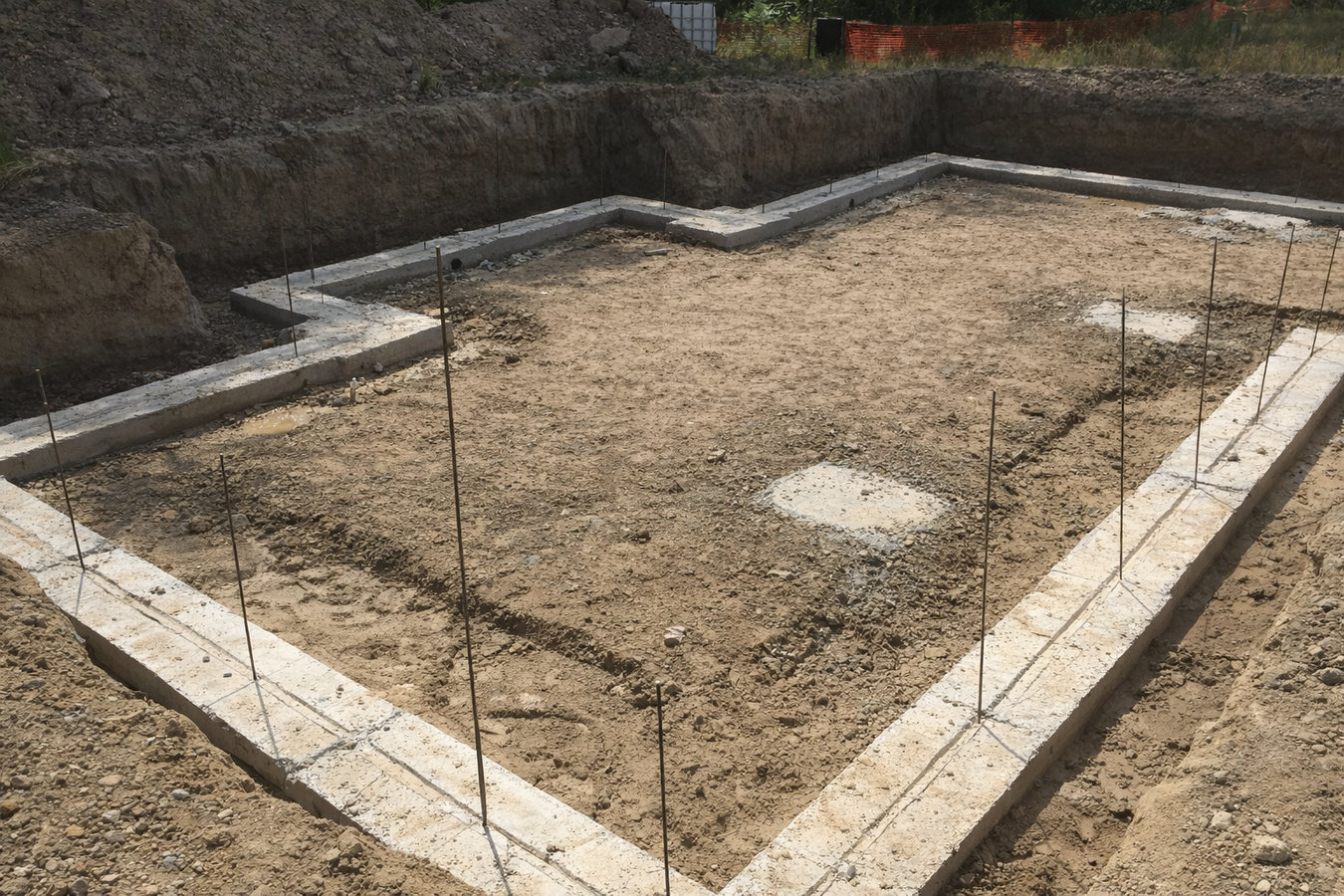
A leaning deck post or sticking door is often a footing problem underneath. We pour footings at the correct depth for Harrisonburg winters so your structures stay level year after year.
Concrete footings in Harrisonburg are the buried anchor points that hold up decks, porches, additions, and fences, poured at least 24 inches deep to get below the frost line, with most residential jobs completed in one to three days from excavation to the final pour.
A footing is the buried base that holds up everything above it. Without one poured at the right depth for Harrisonburg's frost line, even a well-built structure will heave and crack after its first hard winter. If you are planning a new deck, porch, or addition, the footing conversation has to happen before framing, before permits, before anything else. And if you have an existing structure that is showing movement, a concrete contractor can assess whether the footings below are the cause. Footing work pairs closely with broader foundation installation when a project involves more than individual anchor points.
Whether you need a handful of deck footings, replacement footings for a porch that has started to lean, or structural footings for a new addition, the process is the same: assess the site, confirm soil conditions, pull the permit, dig to the right depth, pass the pre-pour inspection, and pour.
If a post that used to stand straight is now visibly tilted, or you can see a gap opening between your porch and the house wall, the footing underneath has likely shifted or failed. In Harrisonburg, this often happens after a hard winter when frost heave has pushed a shallow footing upward. This is a safety issue, not just cosmetic - do not wait to have it assessed.
Diagonal cracks at the corners of windows and doors - especially in older Harrisonburg homes - often signal that the foundation or footings beneath that section have settled unevenly. If you are seeing cracks that were not there a year ago, it is worth having a concrete contractor look at what is happening below grade before the movement gets worse.
When footings settle or shift, the house frame moves with them, and doors and windows are often the first place you notice it. If a door that used to swing freely now drags on the floor or will not latch - and you have not had obvious water or humidity issues - footing movement is a real possibility worth investigating.
If you have replaced a fence post or mailbox post more than once and it keeps getting pushed up or knocked crooked, the issue is almost certainly that the original posts were not set deep enough below Harrisonburg's frost line. A properly poured concrete footing at the correct depth solves this problem permanently.
We pour concrete footings for decks, porches, room additions, outbuildings, fences, and gate posts throughout Harrisonburg and the surrounding Shenandoah Valley. Every footing is dug to at least 24 inches to clear the local frost line, reinforced with rebar, and poured after the required building inspection confirms depth and placement. We coordinate the permit process with the City of Harrisonburg or Rockingham County - whichever jurisdiction your property falls in. If your project eventually grows into a full addition or structural expansion, we can also handle broader foundation raising work when that becomes part of the scope.
Before quoting, we assess your soil conditions - an important step in Harrisonburg where clay-heavy ground can require a wider footing base to distribute the load properly. A quote given without a site visit is not a reliable number for this type of work.
Suits homeowners building a new outdoor structure or replacing footings under an existing deck or porch that has started to shift.
Suits property owners adding a room, garage, or outbuilding that needs a proper structural base before framing begins.
Suits homeowners who have dealt with fence posts, gate posts, or mailbox posts heaving out of the ground and want a permanent fix.
Suits owners of older Harrisonburg homes where footings were originally poured shallower than current standards and are now showing movement or failure.
Harrisonburg sits at roughly 1,350 feet in the Shenandoah Valley, and the ground here regularly freezes to a depth of about 24 inches in winter. A footing poured shallower than that will be pushed upward by frost heave - a process where freezing water in the soil expands and literally lifts concrete out of the ground. This is why footings that might be adequate in coastal Virginia are not adequate here. The clay-heavy soils common throughout this part of the Valley add another complication: clay expands when wet and shrinks when dry, and a footing sized for a more stable soil type may not spread the load correctly over Harrisonburg's ground. Together, these two factors make depth and proper sizing non-negotiable for any footing that needs to stay put through multiple seasons. Homeowners across Harrisonburg and out into Staunton face the same conditions, and every project we quote starts with a site assessment rather than a number from a spreadsheet.
Harrisonburg's building permit office and Rockingham County's building inspection department both enforce pre-pour inspections for structural footings. That inspection - which happens after the holes are dug but before any concrete goes in - is actually a benefit to you. It confirms the depth and placement are correct before the work is buried and impossible to check. Harrisonburg also has a significant stock of homes built between the 1940s and 1980s, many in neighborhoods like Smithland and Sunset Heights, where original footings were sometimes poured to older, shallower standards. If your home is in that range, it is worth asking whether your current footings are adequate before you add load with a new structure.
We visit your property, assess soil conditions and access, and confirm how many footings your project requires. You receive a written estimate within one business day - no guesses from photos alone.
We apply for the building permit from the City of Harrisonburg or Rockingham County, depending on your property location. We schedule the pre-pour inspection and confirm the timeline with you - permit review typically takes a few days to two weeks.
We dig to the required depth - at least 24 inches below grade in Harrisonburg - and set any forms or reinforcement. The building inspector confirms everything before we pour. You do not need to be present for the inspection, but you are welcome to be.
Concrete is poured and finished. The footings need about a week before you can build on them under normal conditions. We do a final walkthrough, confirm placement is correct, and close out the permit so your records are clean.
Free on-site estimate, permits handled, and no surprises mid-project. We assess your soil before we quote.
(540) 246-0519In Harrisonburg, that means at least 24 inches below grade on every footing we pour. We do not cut this corner to save time or reduce material cost. A footing poured too shallow in the Shenandoah Valley will heave out of the ground and damage the structure above it, and fixing that costs far more than doing it right the first time.
Harrisonburg's clay-heavy soils can change the size and design of a footing. We assess conditions before we give you a price, so the number you agree to is the number you pay. Contractors who quote without a site visit often find surprises in the ground that end up on your bill.
Properties in Harrisonburg go through the city permit office. Properties in the county go through Rockingham County Building Inspections. We handle both and coordinate the pre-pour inspection so the process does not stall your project timeline.
A large share of Harrisonburg's housing stock was built between the 1940s and 1980s, and many of those homes have footings that predate current depth requirements. Virginia's Uniform Statewide Building Code sets the current standard. We can assess whether your existing footings are adequate for a planned addition or new structure before you commit to the project.
Footings are not visible once the project is done, but they determine whether everything above them stays level for decades or starts to move after the first few winters. Call us or fill out the estimate form and we will visit your site and tell you exactly what your project needs.
When movement goes beyond individual footings, foundation raising addresses the larger structural issue at the base of your home.
Learn MoreFull foundation work for additions and new structures that require more than standalone footing anchor points.
Learn MoreSpring footing slots fill fast in the Shenandoah Valley. Call now or request a free on-site estimate and lock in your start date before the busy season hits.