Loading...
Serving Harrisonburg, VA and surrounding areas. (540) 246-0519
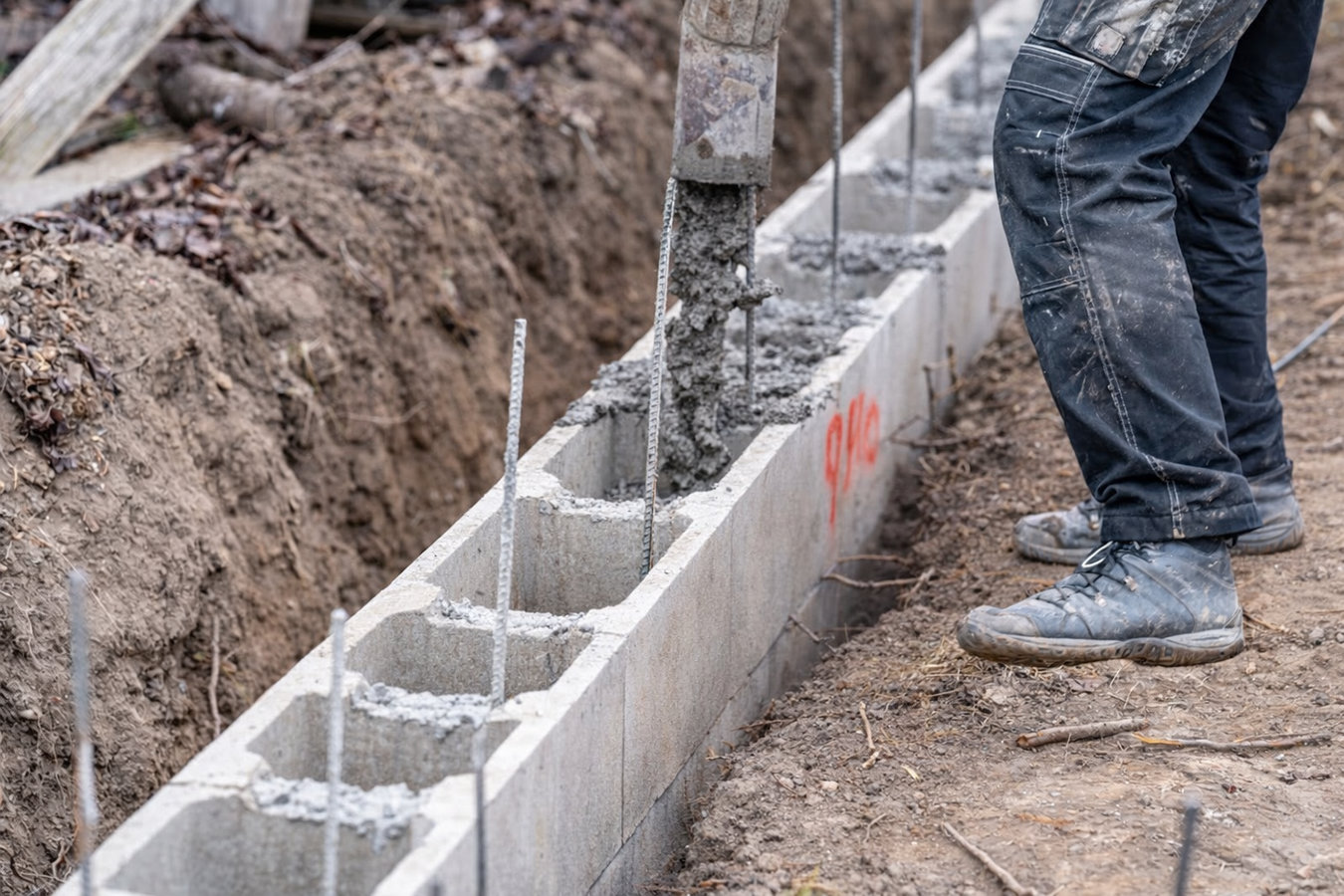
A settled or sunken foundation does not always need to be torn out. We lift it back to level in hours - not days - so your floors, doors, and walls feel right again without the cost of a full pour.
Foundation raising in Harrisonburg, VA is the process of lifting a sunken or uneven concrete slab back to its original level position by pumping material underneath it to fill voids and push the concrete up - most jobs are completed in a single day, with foot traffic restored the same afternoon. Rather than tearing out and replacing the old concrete, a trained crew drills small holes, injects the lifting material, and patches the holes before leaving.
Harrisonburg sits on clay-heavy soils that swell when wet and shrink when dry, creating a constant push-and-pull under your foundation every season. Combined with the Shenandoah Valley freeze-thaw cycle, that soil movement is the reason so many area homeowners discover new settling each spring. Foundation raising addresses the symptom efficiently, but fixing any drainage issues nearby is what makes the result last.
If the slab has dropped too far or the concrete itself is structurally compromised, a new pour may be the better path. Our slab foundation building service covers full replacement when raising is no longer the right call.
If a door that used to swing freely now drags on the floor, or a window that opened easily now jams, your foundation may have shifted. In Harrisonburg, this often shows up in late winter or early spring after a hard freeze-thaw season has moved the soil under your slab.
Walk around the outside of your home and look where the foundation meets the ground. If you can see a gap that was not there before, the concrete has likely dropped. Harrisonburg clay soils pull away from structures during dry summers, making these gaps appear faster than homeowners expect.
If a round object rolls consistently toward one side of a room, your floor is no longer level. This signals the foundation beneath that area has settled, and the problem tends to get worse over time if left unaddressed.
A noticeable tilt that directs water toward your house rather than away is both a tripping hazard and a water management problem. In older Harrisonburg neighborhoods, this is a very common finding and exactly the kind of job foundation raising is designed to fix.
We lift settled slabs for Harrisonburg homeowners using two proven methods. Traditional mudjacking pumps a cement-and-soil mixture underneath the concrete to fill voids and push it upward. Polyurethane foam injection does the same job with a lighter, faster-curing material that leaves smaller holes - it is often preferred when working near older structures where adding heavy material could cause new stress. We assess your specific slab, soil, and drainage situation before recommending which method fits.
Every foundation raising job includes a full drainage assessment. Harrisonburg clay soils are the main reason slabs settle here - and water management is what determines whether a lift holds for years or needs to be redone. We also provide concrete cutting when sections need to be removed before lifting or when drainage channels need to be cut into the slab. For situations where raising is not enough, our slab foundation building service provides a full replacement.
Best for large slabs where cost is the priority - pumps a proven cement-soil mix under the concrete to fill voids and restore level.
Best for projects near older structures or when minimal disruption matters - lighter material, smaller holes, faster cure time.
Ideal for front stoops and back porches that have dropped and now direct water toward the house.
For garage slabs that have settled unevenly, leaving low spots that pool water or make the floor feel unstable underfoot.
Harrisonburg sits in the Shenandoah Valley where soils are a mix of clay and areas underlain by limestone bedrock. Clay soil is the main driver of foundation settling here: it swells when wet and shrinks when dry, creating seasonal movement under every slab in the city. Add in the freeze-thaw cycles that come with the valley elevation - temperatures crossing above and below freezing repeatedly each winter - and you have conditions that accelerate settling faster than in lower, warmer parts of Virginia. Homeowners in the older neighborhoods near downtown and James Madison University tend to see this most, because homes from the 1940s through 1970s were often built on soil that was not compacted to modern standards.
The good news is that foundation raising is well-suited to Harrisonburg conditions when it is paired with proper drainage correction. Homeowners in Staunton and Waynesboro face similar Shenandoah Valley clay soil conditions, and we serve those areas as well. Scheduling foundation raising in late summer or fall - before the next freeze-thaw season begins - gives the lift the best chance of holding long-term. For authoritative guidance on soil movement and foundation performance, the American Concrete Institute publishes guidance on slab lifting that is worth reviewing.
When you call, we ask a few basic questions about what you are seeing, where it is located, and how long it has been going on. We schedule a visit to look at the area in person. You receive a written estimate within 1 business day.
We inspect the settled area, check for cracks, measure how far the slab has dropped, and look at the drainage around your home. We explain the cause and give you a written estimate before any work begins.
If your job requires a permit from the City of Harrisonburg Community Development office, we handle that paperwork on your behalf. Once permits are in hand, you receive a confirmed work date.
The crew drills small holes through the slab, pumps the lifting material underneath, and raises the concrete back to level - most jobs take two to four hours. Drill holes are patched before we leave and the area is cleaned up the same day.
Free written estimates. Permitted work. We respond within 1 business day.
(540) 246-0519We pull required City of Harrisonburg permits before any work starts. Permitted foundation repairs are inspected and on record, which protects your investment if you ever sell the home.
We look at the whole picture - not just the slab. Harrisonburg clay soils mean a lift done without correcting drainage is temporary. We flag every drainage issue so your repair holds through future winters.
We respond to all requests within 1 business day and visit your property before quoting. You get a written breakdown of scope, method, and cost - no guesswork on what you are paying for.
Harrisonburg Concrete holds a state contractor license verified through the Virginia Department of Professional and Occupational Regulation. You are covered from the first day of work through project completion.
Every credential on this list means something practical for your specific job. State licensing through the Virginia Department of Professional and Occupational Regulation means you can verify our standing before hiring. The drainage check means you are not paying for a lift that will need to be redone next spring.
Precise cutting for damaged slab sections, utility openings, or foundation modifications - a clean cut is the first step in many foundation repair workflows.
Learn MoreWhen a settled foundation is beyond lifting, we pour a new slab built to current standards and sized for Harrisonburg soil conditions.
Learn MoreHarrisonburg freeze-thaw season starts earlier than most homeowners expect - locking in your date now means the problem is handled before it gets worse.