
Loading...
Serving Harrisonburg, VA and surrounding areas. (540) 246-0519
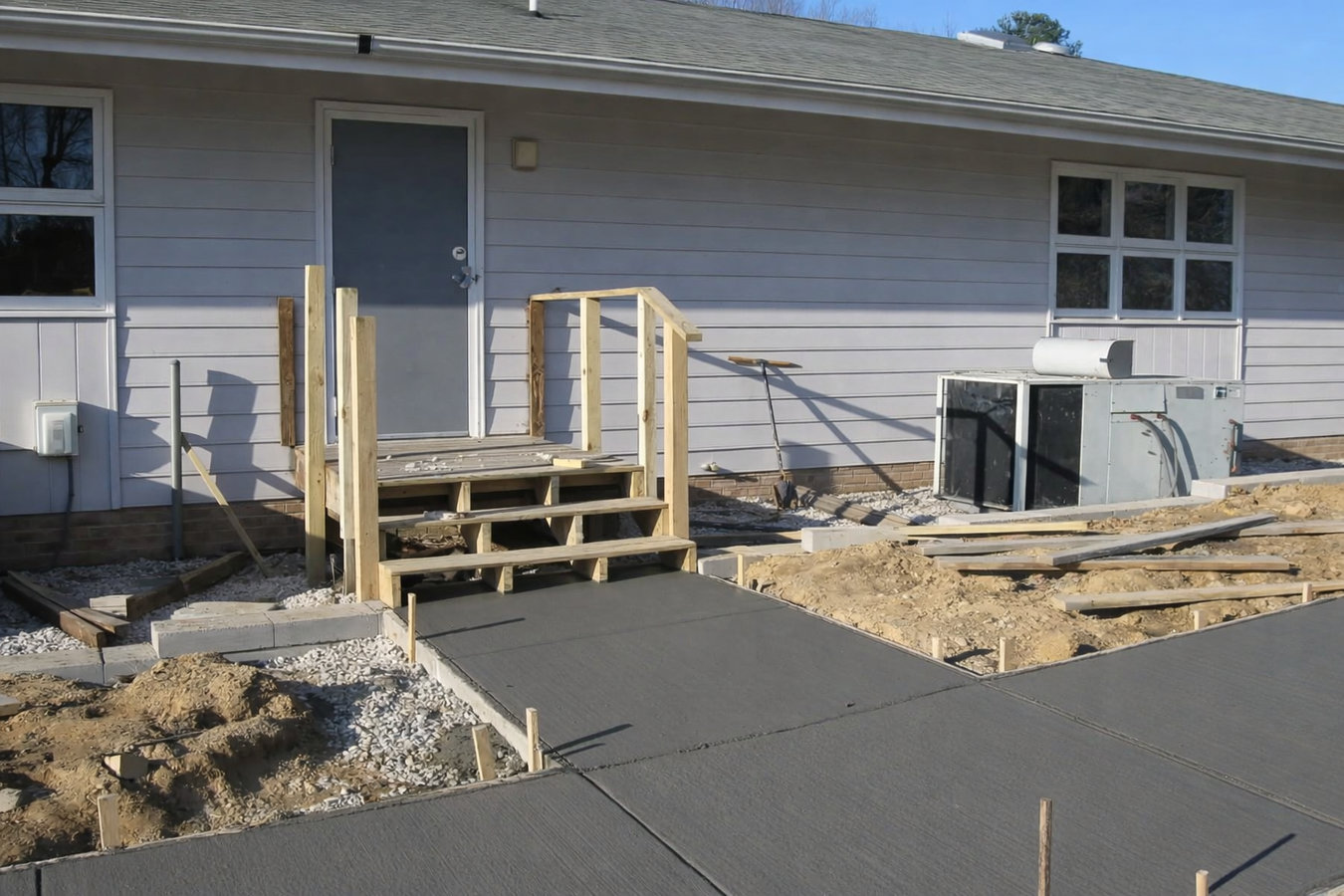
A heaving, cracked, or missing sidewalk is a safety hazard and a curb appeal problem. We build concrete walkways in Harrisonburg that are properly graded, permitted when required, and built to handle Virginia winters.
Concrete sidewalk building in Harrisonburg involves removing the existing surface if needed, grading and compacting a stable base, setting forms, pouring and finishing the concrete, and curing - most residential projects take one to two days of active work, with curing complete in three to seven days before normal foot traffic.
A lot of homes in Harrisonburg's older neighborhoods - especially those near downtown and the JMU area - have original sidewalks that have been cracked, heaved, or patched so many times that replacement is the only real fix. The clay soils throughout the Shenandoah Valley expand and contract with the seasons, and a sidewalk without a proper compacted base underneath it will keep losing that fight year after year.
If you are replacing a front walk and want something that adds character along with durability, our concrete driveway building service can complete the picture if your driveway is in similar shape.
If one slab of your sidewalk sits higher or lower than the one next to it - even by half an inch - that is a tripping hazard and a sign the ground underneath has moved. In Harrisonburg clay soils, this heaving is common, especially in older neighborhoods. Once sections start shifting, patching rarely holds for long.
After a hard Shenandoah Valley winter, look closely at your sidewalk surface. Small chunks breaking away, a rough pitted texture, or a powdery layer that brushes off means the concrete is spalling - the freeze-thaw cycle has broken down the top layer. This gets worse every winter and becomes a safety issue over time.
Hairline cracks in concrete are normal. But when cracks grow wide enough to collect debris, allow water in, or create an uneven edge, the slab has failed. Water that gets into wide cracks freezes in Harrisonburg winters, expands, and makes the crack wider - so a manageable crack today becomes a much bigger problem by spring.
A sidewalk that tilts toward your house is directing rainwater toward your foundation instead of away from it. If you notice puddles near your foundation after rain, or if the sidewalk visibly pitches inward, the grade needs to be corrected. A new properly sloped concrete sidewalk moves water away from your home.
We build concrete sidewalks for front entries, side yards, garden paths, and connections between a house, garage, and street. Every project includes removing the old surface when present, preparing and compacting the base, setting forms, pouring the concrete with a broom finish for safe footing in wet conditions, and cutting control joints to guide any future cracking along predictable lines instead of randomly across the surface.
For homeowners who want more visual interest than plain concrete, we can discuss stamped or decorative options as part of a walkway project. We also handle front walks that connect to the garage floor concrete work if you are updating multiple surfaces at once.
For homes where the path from the street or driveway to the front door is cracked, heaved, or missing - the first impression visitors and neighbors get of your property.
Connects garages, garden areas, gates, and utility areas with a durable surface that keeps foot traffic off grass and eliminates muddy workarounds.
Full tear-out and replacement of existing walks that are past the point where patching makes financial sense, including proper base prep and grading.
For properties that have never had a concrete walk, or where a new addition, garage, or entry point needs a proper path connecting it to the rest of the property.
Harrisonburg's Shenandoah Valley location means the ground freezes and thaws multiple times every winter. That repeated movement is one of the most common reasons sidewalks crack and heave in this area - especially in the older neighborhoods near downtown and the JMU campus where original sidewalks from the 1940s through 1960s are still in place. A new sidewalk built with a properly compacted base and the right concrete mix handles these conditions far better than the original work in many of those homes.
The City of Harrisonburg requires permits for most sidewalk work touching the public right-of-way - the strip of land between your yard and the street. We handle that paperwork before any work begins, which protects you from having to redo unpermitted work later. Homeowners we work with in Culpeper and Front Royal deal with the same clay soil challenges, and our approach to base preparation is consistent across every project in the region.
When you reach out, we schedule an in-person visit - not just a number over the phone. We measure the area, assess the existing surface and ground conditions, and give you a written estimate that breaks down exactly what is included.
If your sidewalk touches the public right-of-way, we pull the required permit from the City of Harrisonburg before any work begins. You should not have to navigate city paperwork yourself - we handle it. This step can add a few days to the timeline, so factor that in when planning.
The crew removes the old sidewalk, hauls away debris, and prepares the ground. This means grading so water drains away from your home, compacting the soil for a firm base, and adding a gravel layer for drainage. This is the step that determines long-term quality.
Forms are set, concrete is poured and given a broom finish for safe footing, and control joints are cut. Before the crew leaves, you walk the finished sidewalk together. Edges should be clean, joints even, and the surface consistent. If anything does not look right, say so before the crew packs up.
We respond within one business day. Written quote with everything spelled out - no surprises.
(540) 246-0519Front sidewalk work in Harrisonburg that touches the public right-of-way requires a city permit before any work starts. We pull that permit for you - protecting you from unpermitted work that the city can require you to tear out and redo. You can review the City of Harrisonburg Public Works requirements at harrisonburgva.gov.
Harrisonburg sits on clay-heavy soils that move with the seasons. A sidewalk without proper grading, soil compaction, and a gravel drainage layer is set up to crack and heave within a few winters. We do not skip that step, even when it adds time to the job - it is the reason your sidewalk will still be flat in ten years.
Virginia requires concrete contractors to hold a license through the Department of Professional and Occupational Regulation. Our state license means our qualifications have been reviewed by the state, and you have a formal avenue if something goes wrong. You can verify any contractor's license status online before hiring.
Harrisonburg's older neighborhoods often have sidewalks that tilt toward the foundation rather than away from it. Every sidewalk we build is graded to direct water away from your home - so you are not trading a cracked walk for water problems near your foundation.
Concrete sidewalk work in Harrisonburg is straightforward when the base preparation and permitting are handled right from the start. We have been doing this work in the area since 2024, and we know the soil conditions, the permit process, and what it takes for a sidewalk to hold up through Shenandoah Valley winters.
Pair a new front walk with an upgraded garage floor - a durable, properly finished concrete surface inside the garage that holds up to vehicles and daily use.
Learn MoreWhen the driveway is in similar shape to the sidewalk, replacing both at once saves mobilization costs and gives the whole front of the property a consistent, finished look.
Learn MoreSpring booking slots fill up fast - contact us now and lock in your date before the good-weather window closes.