Loading...
Serving Harrisonburg, VA and surrounding areas. (540) 246-0519
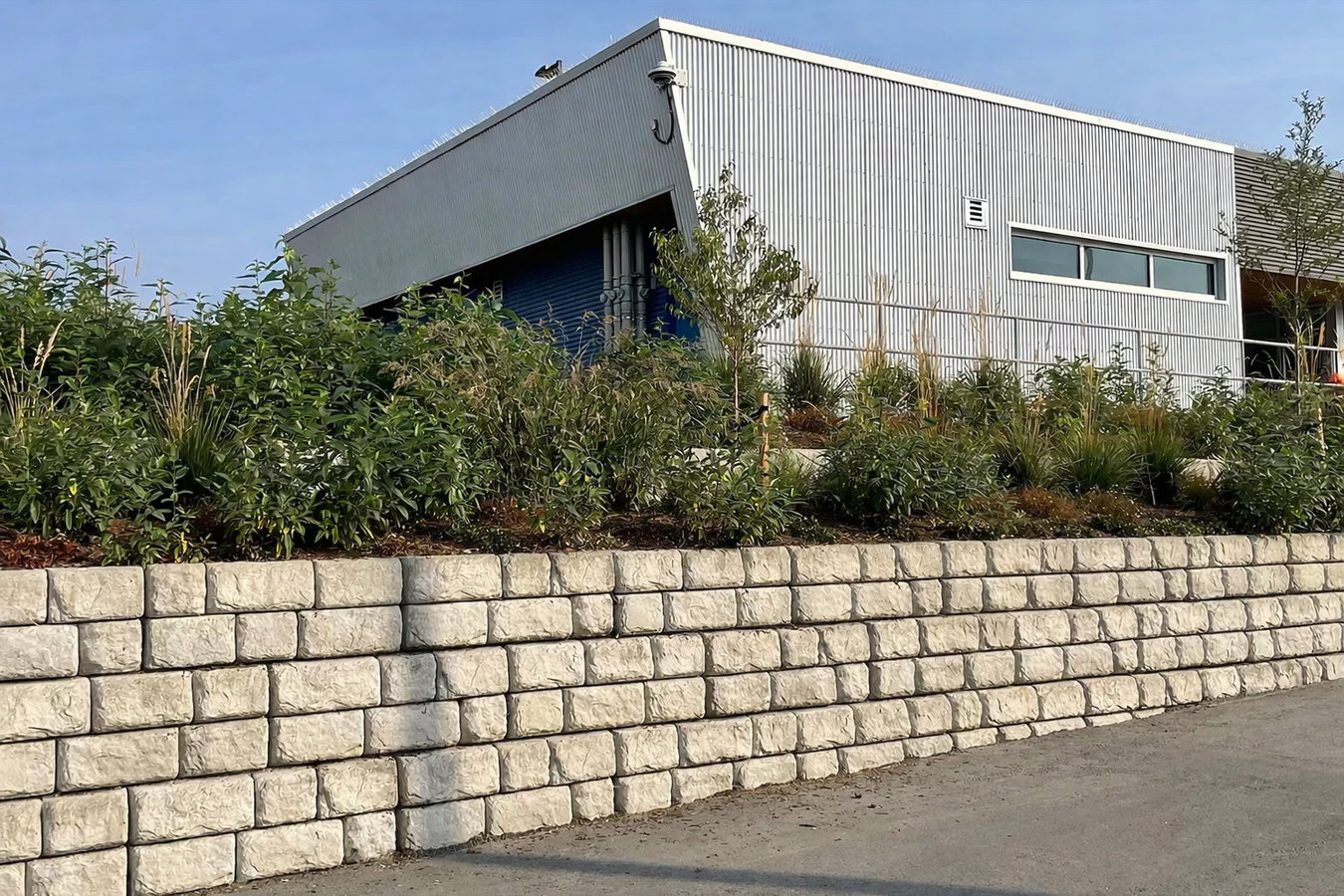
If your yard is losing ground every spring, a concrete retaining wall gives the slope a permanent edge that holds through every Shenandoah Valley winter.
Concrete retaining walls in Harrisonburg hold back sloped soil, stop erosion, and create level usable space, with most residential projects completed in two to five days on-site.
Harrisonburg sits in the northern Shenandoah Valley, where many residential lots have meaningful grade changes. Without a structural edge to hold the slope, soil washes downhill every spring - slowly undermining patios, driveways, and foundations. Concrete retaining walls give that slope a permanent anchor that does not rot, shift, or rely on plant roots. If your yard also needs a finished path alongside the wall, our concrete sidewalk building work integrates cleanly with retaining wall projects.
Whether you are managing a hillside, creating a raised garden bed, or protecting your foundation from runoff, the right wall makes the difference between a yard that holds and one that keeps slipping away.
After a heavy spring rain, if you find soil, mulch, or gravel collecting at the base of a slope, that is erosion happening right now. Over months, it undercuts plantings, exposes tree roots, and eventually threatens patios and driveways. A retaining wall stops that cycle with a firm, permanent edge.
If an older wall is tilting forward at the top or showing horizontal cracks along its face, it is under more pressure than it can handle. In Harrisonburg's climate, freeze-thaw cycles stress walls every winter and accelerate deterioration once it starts. A leaning wall will not fix itself.
A hillside held in place only by grass and plant roots is not a reliable solution on steeper grades, especially after a wet spring or a dry summer that kills off ground cover. Common in Harrisonburg's hillier neighborhoods, these slopes need a structural anchor that does not depend on weather.
If rainwater flows toward your house rather than away from it, a grade issue is often the cause. Clay-heavy soils in the Shenandoah Valley hold water near foundations instead of draining it away quickly, and that sitting water is a slow threat to basements and crawl spaces.
We build poured concrete walls and concrete block walls depending on the height requirements, aesthetic goals, and site conditions of your property. Poured concrete walls are monolithic and extremely strong - ideal for taller walls or anywhere maximum durability is the priority. For projects that also need finished transitions into other spaces, our work connects naturally with our concrete floor installation service for garages, basements, and utility spaces.
Every retaining wall we build includes proper drainage - gravel backfill and weep holes to let water escape before it can push the wall outward. That drainage layer is what separates a wall that stands for 50 years from one that leans after a few winters. We also handle the city permit process in Harrisonburg from start to finish, including engineering coordination for walls over four feet. If your project involves steps down a slope or into a wall opening, our concrete steps construction team handles that work as a single project.
Best for homeowners who need maximum structural strength or a wall taller than four feet where engineering review is required.
Suits homeowners who want a clean, finished look for garden terraces, raised beds, or low-height landscape walls.
Ideal for properties with clay-heavy soils or lots that slope toward the house, where water management behind the wall is the primary concern.
Right for any homeowner who wants a clean permit record on file - especially useful for properties that may be sold in the future.
Harrisonburg is built into rolling terrain. Neighborhoods on the city's edges - where newer development pushed onto hillier land - frequently have graded lots where slope management is an ongoing concern. The clay soils that are common throughout the Shenandoah Valley hold water instead of draining it, which means the pressure behind a poorly built wall builds fast after rain. That combination of hilly terrain and slow-draining soil makes drainage design more critical here than in flatter parts of Virginia. Harrisonburg also averages enough cold weather that walls face repeated freeze-thaw cycles every winter, which accelerates any failure that started with bad drainage.
We work across the city and surrounding areas. Homeowners in Staunton face similar valley terrain and soil conditions, and we bring the same drainage-first approach to every job there. Clients in Front Royal also know us for retaining wall work on sloped residential lots. Wherever you are in the region, the wall we build is designed for the soils and climate of this specific part of Virginia - not a generic spec.
We come to your property in person before quoting - a retaining wall price done from photos is rarely accurate. You will hear back within one business day to schedule the visit.
If your wall needs a permit, we submit the application to the City of Harrisonburg Community Development office on your behalf. That process usually adds one to two weeks to the schedule, which we build in from the start.
The crew digs below the frost line, compacts the base, and installs the gravel drainage layer before any concrete is placed. This is the hidden work that keeps the wall standing for decades.
The wall goes up over one to three days depending on length and height. After curing, we backfill and restore the surrounding area, then walk the finished site with you before we leave.
No sales pitch - just a free on-site estimate and a straight answer about what your property needs.
(540) 246-0519We include gravel backfill and weep holes on every wall we build in the Valley. That drainage layer is what separates a wall that stands for 50 years from one that leans after a few hard winters - and it is not optional with us.
Our work is done under a Virginia DPOR contractor license, which you can verify online in minutes. Virginia licensing requires meeting the state's standards for training, insurance, and financial responsibility - it is your baseline assurance that the contractor is legitimate.
Verify at DPORWalls over four feet in Harrisonburg require a city permit, and taller walls need an engineer's stamp. We handle both - submitting to the City Community Development office, coordinating the inspection, and delivering a clean permit record you can show a future buyer.
The Shenandoah Valley's clay-heavy soils hold water and shift with the seasons. We have built retaining walls across this region and know how to prepare footings and drainage layers that stay stable even when the surrounding soil is saturated after a wet spring.
These are not selling points - they are the baseline for what a properly built retaining wall requires in this climate. Every project we take on in Harrisonburg gets the same approach: correct drainage, correct depth, correct permits. That is how walls built to last actually get built.
New or replacement concrete floors for garages, basements, and utility spaces built to handle Harrisonburg's seasonal soil movement.
Learn MoreConcrete steps designed to transition safely from one grade level to another, often paired with retaining wall projects on sloped lots.
Learn MoreSpring is the busiest season for wall work in the Valley - call today or submit a request online to lock in your project date before the schedule fills.